Pollution is associated with an increased risk of stroke, major bleeding and mortality in patients with atrial fibrillation
IMIB researchers publish a study in the prestigious journal 'Mayo Clinic Proceedings' revealing a relationship between high levels of PM10 and complications in more than 1,300 residents of the Region of Murcia who suffer from this cardiac arrhythmia Comparisons between temperature and seasons show that the risk of cardiovascular events increased in spring, fall and winter relative to summer. Mortality risk increased only during winter
Researchers from the Biomedical Research Institute of Murcia (IMIB), located in Spain, have discovered that high levels of air pollution by PM10 particles are associated with an increased risk of ischemic stroke, major bleeding and allcause mortality from in patients with atrial fibrillation (the most common cardiac
arrhythmia). The journal 'Mayo Clinic Proceedings', a high-impact publication edited by the Mayo Clinic (Rochester, USA), published today this study, carried out by researchers from the Hematology and Clinical-Experimental Medical Oncology (Dr. Vanessa Roldán and Dr. Vicente Vicente) and Clinical and
Experimental Cardiology (Dr. José Miguel Rivera-Caravaca and Dr. Francisco Marín) groups.
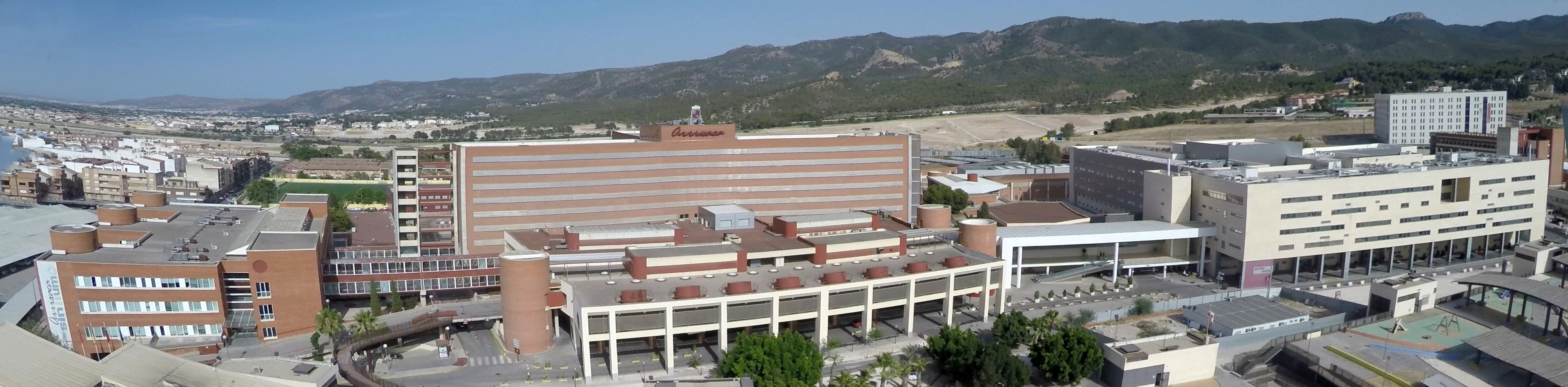
"Given the news warning of the increase of air pollution in Murcia during 2019 and early 2020, we consider that it would be very interesting to study this issue. So we chose two parameters that seemed key and characteristic of the city: temperature and PM10, which are small solid or liquid particles of dust, ash, soot, metals, cement or pollen, which are dispersed in the atmosphere and are inhalable by humans. Precisely, when measures were taken at that time such as restricting traffic or making free the public transport, it was because PM10 levels exceeded the daily limit value for the protection of human health set by European regulations”, explains Dr. José Miguel Rivera, researcher responsible for the study, member of the Clinical and Experimental Cardiology group from IMIB, of the Department of Cardiology of the Virgen de la Arrixaca University Clinical Hospital (HCUVA) and the Biomedical Research Networking Center on
Cardiovascular Diseases (CIBERCV).
The most common cardiac arrhythmia
To test the hypothesis of this association between pollution, temperature and complications in atrial fibrillation, the research group used a dataset recorded by Dr. Vanessa Roldán, principal investigator at IMIB, hematologist at the Morales Meseguer General University Hospital de Murcia and Professor at the University of Murcia (UMU). It includes 1,361 patients with atrial fibrillation, from the areas VI and VII of the Murcian Health System who where under therapy with vitamin K antagonist oral anticoagulants (such as warfarin), who were followed for almost 10 years. The climatological data were obtained from the records of the stations available on the website of the Air Quality Agency. Atrial fibrillation is the most common cardiac arrhythmia in the general population. The current prevalence ranges between 2%-4%, and since it is closely related to age, an increase in prevalence is expected in the coming years. In fact, in people over 85 years of age the prevalence is around 15%. Regarding incidence, at 55 years, one of every three citizens will develop atrial fibrillation. The socioeconomic cost associated with this pathology is high because it increases five-fold the risk of stroke, causing 20%-30% of all cases. In addition, atrial fibrillation increases the risk of death between 1.5 and 3.5 times, almost two-fold the risk of suffering from dementia, causes deterioration in the quality of life in 60% of patients, and causes between 10% and 40% of all annual rehospitalizations.
More adverse events during winter
The results from this study show that both, high levels of PM10 and low temperatures, were associated with an increased risk of major bleeding and allcause mortality. Furthermore, elevated PM10 levels alone were associated with an increased risk of ischemic stroke, although not temperature. However, low temperatures were associated with higher probability of suffering adverse cardiovascular events. “Regarding seasons, winter showed the highest incidence of adverse cardiovascular events, major bleeding, ischemic stroke and death. In other words, it was the period of the year in which clinical complications occurred most frequently. Comparisons between seasons showed that the risk of adverse cardiovascular events increased in spring, fall and winter compared to summer, while the risk of mortality increased only during winter in relation to summer ”, explains Dr. Rivera. “In our opinion, the results that we have obtained open up a new spectrum of potential parameters that should be considered when evaluating patients with atrial fibrillation. It is undeniable that climate change has a direct relationship with our health and, therefore, within this more holistic approach to the management of atrial fibrillation that we support, attention should also be paid to less common risk factors, such as pollution”, summarizes the researcher responsible for the study.
What is the IMIB
The Biomedical Reseach Institute of Murcia (IMIB) is the result of the union of researchers from the biosanitary field who belong mainly to the Murcia Health System (SMS) and the University of Murcia (UMU). The Institute is part of a collaboration agreement between the Ministry of Health, the Ministry of Employment, Research and Universities, the SMS and the UMU (Spain). Since 2015 the IMIB has been accredited as a Health Research Institute, a recognition granted by the Carlos III Health Institute (ISCIII) to research excellence centers of the National Health System in Spain. Recently the IMIB has achived to renew its inclusion in the elite of the biosanitary research centers in Spain for another five years. The most important clinical nucleus of the Institute, where the greatest clinical and research activity takes place, is the Virgen de la Arrixaca University Clinical Hospital (HCUVA), the leading hospital center in the Region of Murcia. It currently has more than 950 researchers, 51 group leaders, 108 principal investigators and 90 responsible for clinical trials, organized around several thematic areas mainly focused on oncology, hematology, cardiovascular and digestive diseases, transplants, neurosciences, public health. public-epidemiology health and primary care, immunologygenetics and rare diseases, and biotechnology. During 2019, 557 original articles and scientific reviews were published, 58.4% of them in journals of the first quartile (high impact), and more than 200 clinical trials and 73 doctoral theses were carried out.